
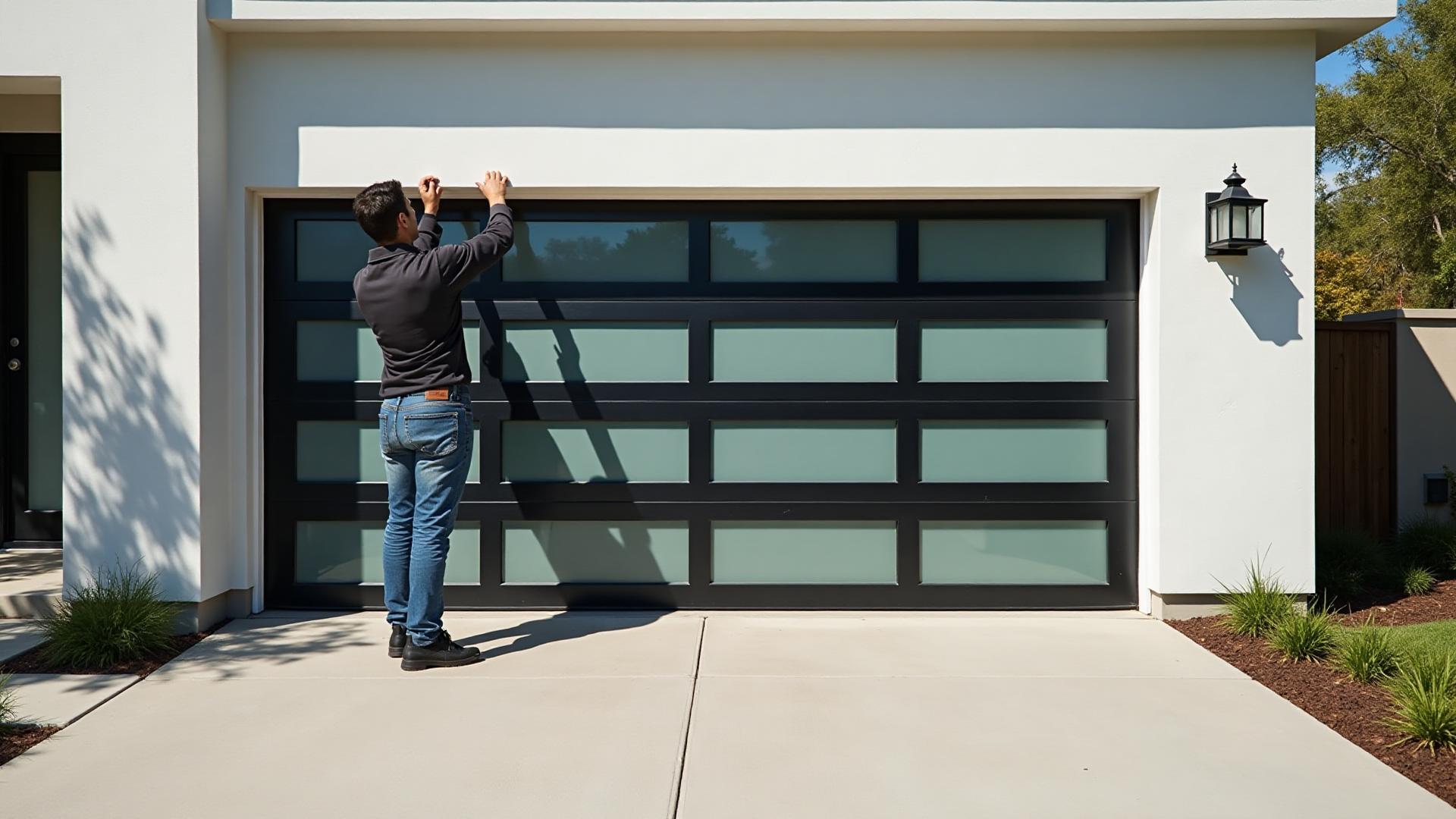
Part of our Garage Door Installations services.
Professional help when your door cannot operate safely
An insulated garage door can moderate heat transfer, add section strength, and reduce some noise, making it useful for attached garages and spaces used as workshops, gyms, or hobby rooms. KC Garage Doors helps homeowners compare polystyrene and polyurethane construction, single-, double-, and triple-layer doors, R-value information, windows, weather seals, opener compatibility, and the measurements required for a safe installation.
- An attached garage shares walls or a ceiling with living space
- The garage becomes especially hot during inland East County weather
- A workshop, gym, or hobby area is used regularly
- The current door flexes, rattles, or transmits substantial street noise
- Damaged or missing seals leave gaps around the opening
- A new door is being planned with windows or a quieter opener
Why homeowners consider an insulated garage door
A garage door fills a large part of the exterior wall, so its construction influences how quickly outdoor conditions reach the garage. In Santee and inland East County, afternoon heat and direct sun can warm an uninsulated metal door quickly. Insulation slows heat transfer through the door sections. It does not turn a garage into conditioned living space, but it can make temperature changes less abrupt when the rest of the garage is reasonably enclosed. Insulated models are one option within our garage door installation service.
Insulation can also add rigidity and damp some vibration. That is useful for wider doors, attached garages below bedrooms, and spaces where rattling or street noise is distracting. The effect depends on the full assembly: section joints, perimeter seals, windows, walls, ceiling, and opener all matter. We discuss the door as one part of the garage rather than promising that insulation alone will solve every comfort or noise concern.
Attached garages, gyms, workshops, and conversions
An attached garage shares part of the home's building envelope. A door with better thermal resistance and sound seals can reduce the direct path for outdoor heat and drafts, which may help the adjacent rooms remain more consistent. Homeowners who enter through the garage also notice when the space is less exposed to hot metal surfaces and gaps around a worn door. For unique sizes or wood-look styles, see custom garage doors.
Garages used for exercise, woodworking, repairs, hobbies, or storage have different priorities than a space used only for parking. A gym may benefit from moderated heat and quieter movement, while a workshop may prioritize rigid sections and perimeter seals that reduce dust entry. A converted or regularly occupied space may have separate permitting, ventilation, electrical, and building-envelope considerations; a new door is only one part of that planning.
Need help with your garage door?
Call (619) 768-0325Polystyrene and polyurethane insulation
Polystyrene insulation is commonly made as rigid boards fitted within the door sections. It can provide useful thermal resistance and is available in different door constructions. Fit matters: gaps and exposed edges reduce the effectiveness of the layer. Depending on the design, the interior may show the insulation or include a protective backing panel that creates a finished surface. Fresh bottom seals and weather stripping help an insulated door perform as intended.
Polyurethane insulation is generally introduced as foam that expands inside the section and bonds to the inner and outer skins. This can create a dense, integrated section with added stiffness. Neither label alone tells the whole story. Section thickness, coverage, facing materials, joint design, layer count, windows, and perimeter sealing all influence the finished door. We compare complete products rather than treating one insulation word as the only decision.
- Rigid polystyrene panels in compatible section designs
- Foamed-in-place polyurethane within enclosed sections
- Section thickness and joint construction considered
- Interior finish and protection matched to garage use
Single-, double-, and triple-layer construction
Layer descriptions explain how the door is assembled. A single-layer door generally uses one exterior skin and may have no enclosed insulation. A double-layer design commonly combines an exterior skin with insulation or a backing material. A triple-layer door typically encloses insulation between exterior and interior skins, creating a finished inside surface and a more protected core.
More layers can improve rigidity, interior appearance, and protection for the insulation, but the right choice depends on the opening, use, exposure, and budget. A lightly used detached garage has different needs from an attached garage with a room above it. We also consider door weight because construction changes affect springs, tracks, hardware, and opener selection. The complete system must be sized for the chosen door.
Using R-value as a comparison tool
R-value describes resistance to heat flow under a stated test method. It is helpful when comparing door constructions, provided the figures are measured and presented on a comparable basis. A higher number generally represents greater resistance through the tested section, but it does not directly predict the temperature of a particular garage or the energy use of the entire home.
The installed opening includes more than insulated sections. Gaps at the bottom, sides, top, and between sections allow air and dust to move around the door. Windows and framing also affect overall performance. We use R-value as one part of selection alongside layer construction, seal design, durability, section weight, appearance, and how the homeowner plans to use the garage. We do not quote isolated product values without a specific product selection.
Weather seals complete the opening
A well-insulated section cannot perform as intended when daylight is visible around the perimeter. Bottom seals compress against the slab, side and top weatherstripping meet the exterior face, and section joints are designed to close as the door reaches the floor. Worn, hardened, torn, or incorrectly sized seals let hot air, dust, leaves, moisture, and pests enter.
During measurement, we inspect the floor and jambs as well as the door opening. A sloped or uneven slab may need a seal profile that can accommodate variation, though a seal cannot correct major concrete problems. Tracks and limits must position the door so seals make contact without excessive opener force. We fit and adjust the door as a system, then check the closed perimeter from inside the garage.
Windows, light, privacy, and sun exposure
Windows bring daylight into the garage and can coordinate the door with the home's architecture. They also interrupt the insulated section, so their size, glazing, placement, and orientation deserve consideration. In a west-facing opening, direct sun can add heat and glare. For a workshop or gym, privacy may matter as much as daylight. Decorative inserts and panel layouts should remain visually balanced across the door.
Window weight and placement are part of the door design and can affect spring selection. We measure carefully and review available configurations for the chosen door rather than modifying a section without understanding its construction. If privacy is a priority, obscure or tinted glazing options may be available depending on the product. We explain choices generally and confirm specifics when a door is selected.
Pairing the door with a quiet opener
A new insulated door is often paired with an opener evaluation. Added section weight is not a reason to make an opener force its way through travel; the springs must counterbalance the door first. Once balanced, the opener is selected for the door size, weight, track arrangement, rail length, headroom, and expected use. Existing opener compatibility should be confirmed rather than assumed.
For an attached garage, a belt-drive opener can reduce drive-system noise compared with many chain-driven arrangements. Rollers, hinges, tracks, mounting, and the building structure still transmit sound, so quiet operation depends on more than the drive type. We can discuss smart controls, battery backup, remotes, and keypad options while keeping mechanical balance and safety reversal at the center of the installation.
Measurement and installation process
Accurate installation begins with the opening width and height, side room, headroom, back room, framing condition, floor, and ceiling obstructions. We review the track layout, spring system, opener position, outlets, lighting, storage, and access. Door style, insulation, layer construction, finish, windows, hardware, and seals are then selected around those constraints. This planning helps avoid a door that fits the catalog but not the garage.
During installation, the old door is removed in a controlled sequence, tracks and supports are prepared, and the new sections are assembled and aligned. Springs are sized and tensioned for the actual door, cables and rollers are checked through full travel, and seals are fitted. The opener is connected or installed only after the door moves correctly by hand. We finish with balance, limits, photo-eye, and reversal tests and explain normal operation and care.
- Opening, clearances, framing, and floor measured
- Door construction and window options confirmed
- Tracks, springs, hardware, and seals installed as a system
- Manual balance and opener safety functions tested
Insulated door installation from Santee
KC Garage Doors serves homeowners in Santee, Lakeside, El Cajon, Alpine, Ramona, La Mesa, and throughout San Diego County. Inland heat, sun exposure, dust, attached living areas, and changing garage uses all shape the conversation. We focus on what insulation can realistically improve and how the selected door will work with the opening and opener.
Cost factors include door size, material, insulation method, layer count, finish, windows, tracks, springs, seals, removal needs, and opener compatibility. We do not offer a generic figure without measuring the opening and reviewing the configuration. You receive a free quote based on the actual door and choices under consideration.
What local customers say
“Kameron was fantastic. Showed up on time, diagnosed the broken spring quickly, and had us back up and running the same afternoon. Honest pricing and great communication.”
“KC Garage Doors did an excellent job replacing our opener. Professional, clean install, and walked me through the new smart features. Highly recommend.”
“Called in the morning with a broken cable and they were out by early afternoon. Fair price, no upsell, great work.”
Related garage door services
Explore new-door planning, measurement, styles, and installation.
View service detailsPair a balanced new door with a correctly planned opener setup.
View service detailsMaintain rollers, hinges, tracks, balance, and safety functions.
View service detailsInsulated Garage Door Installation FAQs
Get a careful diagnosis and a free quote
Tell us what the door is doing, and we will help you plan the safest next step.
Cities we cover for Insulated Garage Door Installation
Same-day insulated garage door installation across San Diego County — click any city for local pricing, neighborhood coverage, and specifics on the door types we see there.
- Insulated Garage Door Installation in La Jolla
- Insulated Garage Door Installation in Del Mar
- Insulated Garage Door Installation in Hillcrest
- Insulated Garage Door Installation in Kearny Mesa
- Insulated Garage Door Installation in Rancho Bernardo
- Insulated Garage Door Installation in San Marcos
- Insulated Garage Door Installation in Vista
- Insulated Garage Door Installation in Alpine
- Insulated Garage Door Installation in Ramona
- Insulated Garage Door Installation in Lemon Grove
- Insulated Garage Door Installation in El Cajon
- Insulated Garage Door Installation in Chula Vista
- Insulated Garage Door Installation in Poway
- Insulated Garage Door Installation in Santee
- Insulated Garage Door Installation in La Mesa
- Insulated Garage Door Installation in Escondido
- Insulated Garage Door Installation in Coronado
- See all service areas →