
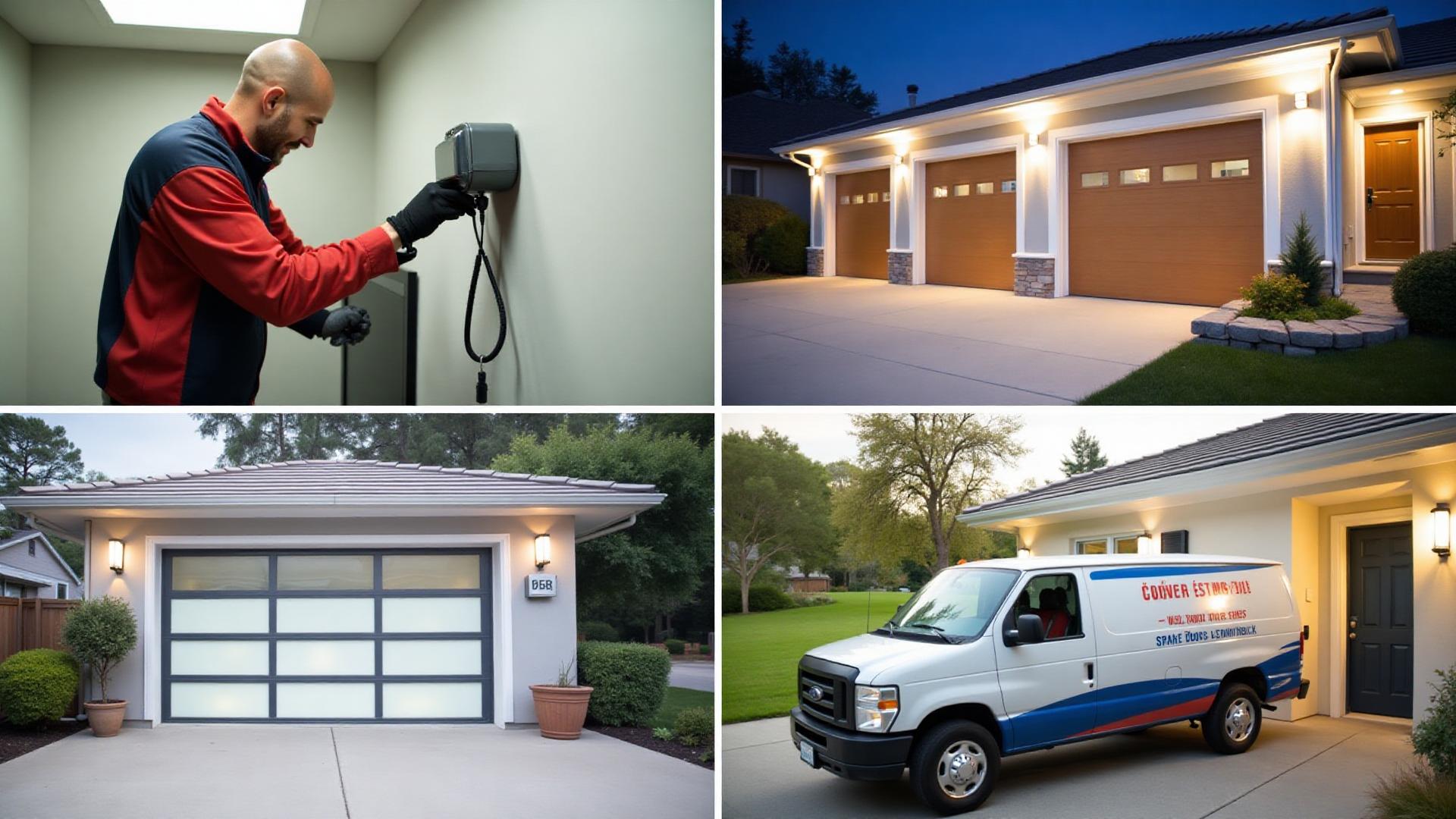
Part of our Garage Door Maintenance Service services.
A focused check of how your door stops, reverses, and stays supported
A garage door safety inspection concentrates on the features and parts that protect people, pets, vehicles, and property. Rather than a general tune-up, it is a deliberate review of how the door reverses when it meets an obstruction, how it behaves when disconnected from the opener, and whether the springs, cables, brackets, hinges, and tracks that hold it up show warning signs. KC Garage Doors tests each function, documents what we find, and explains the safest next step in plain language.
- You are buying or have just moved into a home
- The door was struck by a vehicle or other impact
- Young children or pets use the garage regularly
- The door is older or its service history is unknown
- The door reverses unexpectedly or fails to reverse
- Visible fraying, gaps in a spring, or loose brackets
Auto-reverse (contact) testing
Residential openers are designed to stop and reverse when the closing door meets resistance. We check this contact reversal with an appropriate object laid flat on the floor in the door's path. When the bottom of the door touches it, the opener should stop and reverse promptly rather than pressing down or stalling. Inspections are a core part of preventive garage door maintenance.
A failed contact test can come from several causes: close-force settings turned up to overcome a binding door, travel limits set so the opener believes the door has already reached the floor, a worn drive system, or an opener that lacks modern reversal features. We identify which one applies rather than simply adjusting a dial.
Contact reversal is tested only after confirming the door moves freely by hand. Adjusting force on a heavy or binding door would mask the real problem, so balance and hardware issues are noted and addressed first.
Photo-eye (non-contact) testing
Photo-eye sensors mounted near the floor on each side of the opening project an invisible beam. If something interrupts it while the door is closing, the opener should stop and reverse without the door touching anything. We interrupt the beam during a closing cycle and watch the response. An inspection can be combined with an annual tune-up.
We also inspect the sensor lenses for dirt and spider webs, confirm both units face each other squarely and are firmly mounted, check indicator lights, and look at visible wiring for damage or loose connections. Low afternoon sun can shine directly into some sensors, and we note when positioning makes that more likely.
Sensors must never be bypassed, taped, or moved high on the wall. If a sensor is damaged or misaligned, we explain the repair; a dedicated safety sensor repair visit can follow when needed.
- Beam interruption during closing
- Lens and bracket inspection
- Indicator light behavior
- Visible wiring condition
Need help with your garage door?
Call (619) 768-0325Manual release and disconnected operation
The emergency release lets you disconnect the door from the opener during a power outage or malfunction. We confirm the release handle is present, reachable, and functions as intended, and that the door can be reconnected properly afterward. If the reversal test fails, garage door sensor repair is usually the next step.
With the door disconnected, we move it by hand. A properly counterbalanced door should travel smoothly and stay roughly in place partway open. A door that drops, rises quickly, or is very difficult to lift points to a spring or balance problem that makes manual operation hazardous. In that case we explain the concern before anyone relies on the release during an emergency.
Visual check of springs, cables, brackets, hinges, and tracks
Springs and cables store and transfer a large amount of energy. We look for gaps in torsion spring coils, stretched or distorted extension springs, missing safety cables on extension systems, frayed or rusted lift cables, and cables that sit unevenly on their drums.
The bottom brackets deserve special caution because the lift cables attach there under spring tension. We check them for rust, bending, and loose fasteners without disassembling tensioned parts. Hinges are reviewed for cracks and loose screws, rollers for wobble or damage, and track mounting for loose lag screws, shifted brackets, or bends from impact.
This is an inspection, not a teardown. The purpose is to recognize warning signs, not to take apart components that are under tension without a reason.
Opener force and travel review
Openers have settings that control how far the door travels and how much force the motor applies before it reverses. Over time these can drift or be adjusted to compensate for a door that has become harder to move. We review how the opener starts, runs, and finishes each cycle and whether the settings are appropriate for a door that moves freely.
When settings need correction, they are adjusted only after mechanical issues are understood, then contact and photo-eye tests are repeated to confirm the final result.
What we document and recommend
At the end of the visit we walk you through each item: what passed, what shows normal wear worth monitoring, and what we recommend repairing. We separate an adjustment that can be made during the inspection from a spring, cable, structural, or electrical repair that needs separate approval, and you receive a free quote before that work begins.
Many homeowners schedule a safety inspection when buying a home, after an impact, when children or pets start using the garage, or when an older door's history is unknown. Serving Santee, Lakeside, El Cajon, and communities across East County and San Diego County, we focus on clear answers you can act on.
What local customers say
“Kameron was fantastic. Showed up on time, diagnosed the broken spring quickly, and had us back up and running the same afternoon. Honest pricing and great communication.”
“KC Garage Doors did an excellent job replacing our opener. Professional, clean install, and walked me through the new smart features. Highly recommend.”
“Called in the morning with a broken cable and they were out by early afternoon. Fair price, no upsell, great work.”
Related garage door services
Yearly lubrication, adjustment, and hardware review to keep the door running smoothly.
View service detailsCorrect a door that drops, drifts, or sits unevenly when moved by hand.
View service detailsDiagnose and repair misaligned, dirty, or damaged photo-eye sensors.
View service detailsGarage Door Safety Inspection FAQs
Get a careful diagnosis and a free quote
Tell us what the door is doing, and we will help you plan the safest next step.
Cities we cover for Garage Door Safety Inspection
Same-day garage door safety inspection across San Diego County — click any city for local pricing, neighborhood coverage, and specifics on the door types we see there.
- Garage Door Safety Inspection in La Jolla
- Garage Door Safety Inspection in Del Mar
- Garage Door Safety Inspection in Hillcrest
- Garage Door Safety Inspection in Kearny Mesa
- Garage Door Safety Inspection in Rancho Bernardo
- Garage Door Safety Inspection in San Marcos
- Garage Door Safety Inspection in Vista
- Garage Door Safety Inspection in Alpine
- Garage Door Safety Inspection in Ramona
- Garage Door Safety Inspection in Lemon Grove
- Garage Door Safety Inspection in El Cajon
- Garage Door Safety Inspection in Chula Vista
- Garage Door Safety Inspection in Poway
- Garage Door Safety Inspection in Santee
- Garage Door Safety Inspection in La Mesa
- Garage Door Safety Inspection in Escondido
- Garage Door Safety Inspection in Coronado
- See all service areas →