
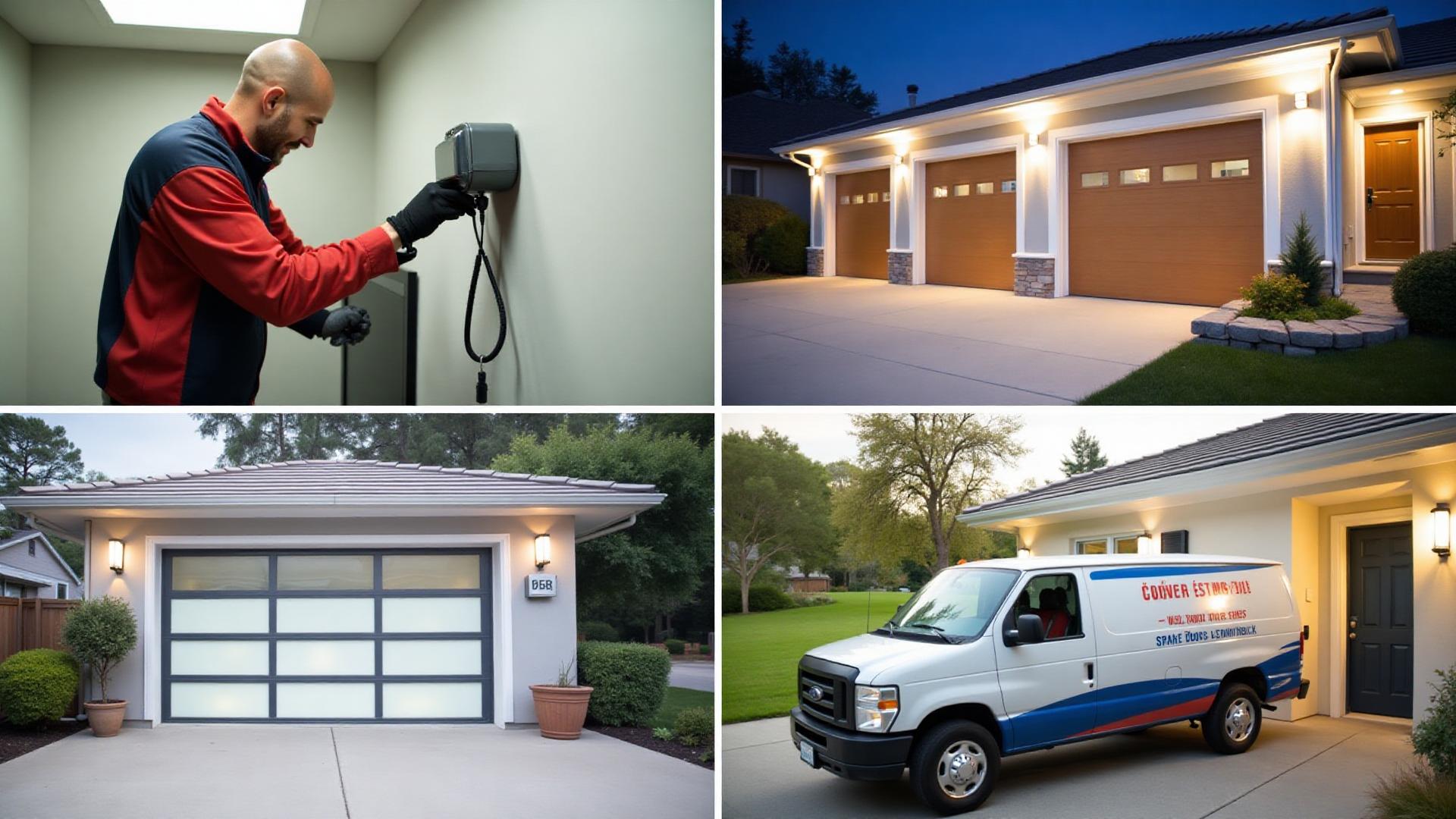
Part of our Garage Door Maintenance Service services.
Professional help when your door cannot operate safely
Garage door weather stripping closes the small but important gaps between the moving door, the floor, and the framed opening. When a bottom seal becomes brittle, flattened, torn, or undersized, daylight, dust, wind-driven water, pests, and hot outside air can enter the garage. KC Garage Doors inspects the door, floor, retainer, side molding, and close position before recommending a compatible seal replacement. That complete approach matters because a crooked door, damaged panel, or uneven slab should be understood before new material is installed.
- A visible line of daylight beneath the closed door
- Brittle, cracked, torn, or flattened bottom rubber
- Dust, leaves, or insects collecting inside the opening
- Water marks near the garage threshold after rain
- Drafts or hot air entering around the door perimeter
- Side or top molding that is loose, split, or no longer touching the door
What garage door weather stripping does
A garage door must move freely, so it cannot be sealed to the building like a fixed wall. Flexible weather stripping bridges the controlled gaps that remain when the door is closed. The bottom seal compresses against the slab, while stop molding along the sides and top rests lightly against the outside face of the door. Together, these pieces reduce openings without preventing normal travel. Seal replacement is part of our garage door maintenance services.
Good contact helps keep windblown dust, leaves, insects, and drafts out of the garage. It can also limit minor wind-driven moisture at the perimeter. Weather stripping is not a cure for drainage problems or flooding, and it cannot make an unconditioned garage airtight. Its job is to create an even, flexible boundary around a door that opens and closes repeatedly.
Because each opening is different, seal replacement begins with inspection rather than choosing material by appearance alone. We look at the retainer profile, floor slope, panel condition, track position, and opener limits. That lets us correct the source of a gap instead of forcing an unsuitable seal into place.
Bottom seal profiles and retainers
The bottom rubber usually slides into an aluminum or built-in retainer attached to the lowest door section. Retainers use different channel arrangements, and the seal has to match them. T-style ends slide through paired channels, bulb seals form a rounded cushion against the floor, and J-type profiles fold into contact as the door closes. These names describe general shapes; dimensions and compatibility still vary. It is often done during an annual garage door tune-up.
We examine the existing retainer for bent edges, corrosion, loose fasteners, or packed debris. A damaged channel can tear a new seal during installation or keep it from feeding evenly across the width of the door. If the retainer remains serviceable, we clean it and install a correctly matched insert. If it is damaged or incompatible, we explain the retainer options before changing it.
Seal width also matters. Material that is too narrow may leave gaps over modest floor variations. Material that is excessively deep can bunch, roll, or make the opener push too hard at the floor. The goal is consistent compression across the opening while allowing the door to settle naturally into its closed position.
- T-style inserts for compatible paired channels
- Bulb profiles that compress against the slab
- J-type profiles for matching retainers
- Retainer inspection before new material is fitted
Need help with your garage door?
Call (619) 768-0325Side and top stop molding
Weather stripping around the jambs and header is commonly integrated into stop molding. The rigid portion fastens to the building, while a flexible flap touches the door face. Over time, sunlight, heat, paint buildup, impacts, and repeated movement can make the flap crack or stay permanently bent away from the door. Loose fasteners can leave short sections fluttering in the wind. A crooked door has to be corrected first with balance and alignment.
Replacing perimeter molding requires more than placing it as tightly as possible. If the flap presses too firmly, it can scrape the finish, create noise, or add resistance as the door travels. If it sits too far away, light and debris pass through. We position each length for light, continuous contact and check it with the door closed and moving.
The door itself must also sit correctly in the opening. A panel that leans, tracks that are spaced unevenly, or worn rollers can make one side contact the molding while the other side has a gap. In those situations, alignment or hardware work comes before the final molding adjustment.
Threshold seals and water management
A threshold seal mounts to the concrete floor and works with the door's bottom seal. It can be useful where a shallow low spot allows wind-driven water to move beneath an otherwise well-sealed door. The raised profile creates another contact point and may help direct minor runoff away from the interior.
Thresholds are not appropriate for every opening. Their position must match the closed door, and the surface must be prepared so the material remains secure. A threshold placed too far inside or selected without considering the bottom seal can interfere with closure. It also cannot correct water flowing toward the garage because of broader grading or drainage conditions.
We explain whether a bottom seal, threshold, perimeter molding, or a combination addresses the visible gap. If the evidence points to a slab or drainage issue beyond the door system, we say so rather than presenting weather stripping as a complete water-management solution.
Heat, dust, and aging seals in East County
Santee, Lakeside, El Cajon, and surrounding inland communities experience heat and dry conditions that can be hard on flexible materials. Repeated warming and cooling gradually removes flexibility from older rubber and vinyl. A seal may look complete while hanging open at the corners because it no longer rebounds after compression.
Dust and grit collect in retainer channels and against the floor. That debris abrades the seal as the door settles and can make removal difficult. Keeping the threshold area clear helps, but material eventually reaches the point where cleaning no longer restores contact. Splits near the ends and a hard, shiny surface are common indicators of aging.
We select a compatible profile based on the opening and explain practical care without promising that one material will eliminate every environmental effect. Periodic visual checks are especially useful before the hottest months and after windy or wet weather exposes a weak section.
Why floor and door problems come first
A diagonal band of light under the door often signals more than worn rubber. The slab may slope, the bottom panel may be bent, a cable may have shifted on a drum, or the tracks may hold the door unevenly. Installing a very large seal over that pattern can conceal the symptom while leaving the mechanical problem untouched.
We compare the bottom edge with the floor, inspect panel joints, and watch both sides of the door through a cycle. If the door is crooked or does not move evenly, it needs to be stabilized and corrected before a final seal is fitted. If the slab itself varies, we discuss what a flexible seal can reasonably accommodate and when a threshold may be useful.
This order protects the new material and the door. A seal forced against a high spot can drag, tear, or place unnecessary load on the opener. Correct geometry allows the seal to compress evenly instead of becoming a substitute for alignment work.
Close-limit adjustment and safety testing
Old bottom seals often remain crushed for years. A fresh profile has more depth and resilience, so the door may meet the floor slightly earlier than it did before. The opener's close travel must not force the door downward just to flatten the new rubber. Excess pressure can bow the top section, strain the rail, or cause the seal to roll.
After installation, we close the door manually where appropriate and observe contact across the width. We then operate it with the opener and adjust the close limit only when needed. The correct setting lets the seal touch and compress without the opener continuing to drive the door against the slab.
We finish by checking photo-eye alignment and the opener's reversal behavior. Weather-seal work should not compromise the safety systems or hide a door that is difficult to move by hand. The final cycle confirms smooth travel, reliable closure, and a continuous seal.
Our weather seal replacement process
The visit starts with the symptoms you have noticed: where light appears, where dust gathers, or when water enters. We inspect the bottom insert and retainer, side and top molding, concrete contact, panels, tracks, rollers, cables, and the door's closed position. That inspection separates material wear from alignment, floor, and opener issues.
Once the condition is clear, we explain which seal areas need attention and what profile is compatible. The door is secured, worn material is removed, channels and mounting surfaces are prepared, and the replacement is fitted without stretching it unevenly. Perimeter molding is cut and positioned for consistent contact.
The work concludes with manual and powered operation, limit review, and safety testing. We check the seal from inside the closed garage for visible gaps and make practical adjustments. You receive a free quote before work begins, with related repairs separated so you can understand the recommendation.
Local seal replacement from Santee
KC Garage Doors serves Santee, Lakeside, El Cajon, Alpine, La Mesa, Ramona, and communities throughout San Diego County from our Santee location. Local heat, dust, and varied residential slabs make careful diagnosis important. The right answer may be a simple bottom insert, perimeter molding, a threshold option, or mechanical correction before sealing.
We use the same measured approach whether the garage protects vehicles, storage, a workshop, or an attached living area. Our goal is to leave the door moving freely with weather stripping that fits the actual opening. Call during our posted hours or request a free quote to arrange an inspection.
What local customers say
“Kameron was fantastic. Showed up on time, diagnosed the broken spring quickly, and had us back up and running the same afternoon. Honest pricing and great communication.”
“KC Garage Doors did an excellent job replacing our opener. Professional, clean install, and walked me through the new smart features. Highly recommend.”
“Called in the morning with a broken cable and they were out by early afternoon. Fair price, no upsell, great work.”
Related garage door services
Combine seal inspection with yearly lubrication, adjustment, and hardware checks.
View service detailsLevel and balance a crooked door before fitting new seals.
View service detailsAddress a damaged bottom section that prevents consistent floor contact.
View service detailsGarage Door Weather Seal Replacement FAQs
Get a careful diagnosis and a free quote
Tell us what the door is doing, and we will help you plan the safest next step.
Cities we cover for Garage Door Weather Seal Replacement
Same-day garage door weather seal replacement across San Diego County — click any city for local pricing, neighborhood coverage, and specifics on the door types we see there.
- Garage Door Weather Seal Replacement in La Jolla
- Garage Door Weather Seal Replacement in Del Mar
- Garage Door Weather Seal Replacement in Hillcrest
- Garage Door Weather Seal Replacement in Kearny Mesa
- Garage Door Weather Seal Replacement in Rancho Bernardo
- Garage Door Weather Seal Replacement in San Marcos
- Garage Door Weather Seal Replacement in Vista
- Garage Door Weather Seal Replacement in Alpine
- Garage Door Weather Seal Replacement in Ramona
- Garage Door Weather Seal Replacement in Lemon Grove
- Garage Door Weather Seal Replacement in El Cajon
- Garage Door Weather Seal Replacement in Chula Vista
- Garage Door Weather Seal Replacement in Poway
- Garage Door Weather Seal Replacement in Santee
- Garage Door Weather Seal Replacement in La Mesa
- Garage Door Weather Seal Replacement in Escondido
- Garage Door Weather Seal Replacement in Coronado
- See all service areas →