
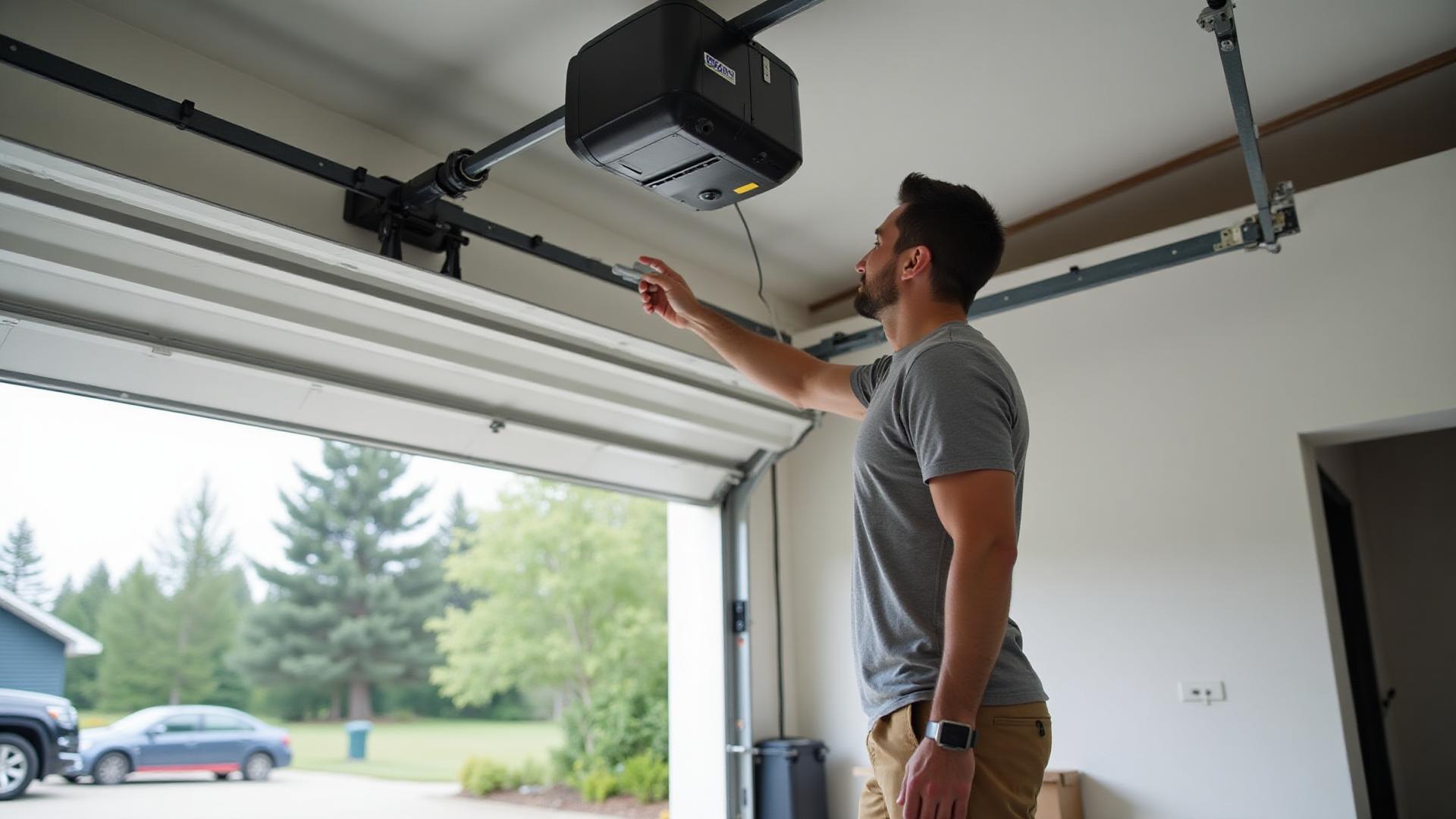
Part of our Garage Door Opener Repair services.
Restore reliable closing without defeating the safety system
Photo-eye safety sensors watch the door's closing path and tell the opener to stop or reverse when the infrared beam is interrupted. When the door will not close, immediately reverses, or shows blinking sensor lights, we test alignment, lenses, brackets, wiring, power, compatibility, and the rest of the closing system without bypassing this essential protection.
- The door starts down and immediately reverses
- The opener runs but the door will not close
- One or both sensor lights blink or remain off
- The door closes only while the wall control is held
- Sensor brackets are loose or visibly misaligned
- Wiring is cut, pinched, corroded, or pulled loose
How photo-eye safety sensors work
A pair of small sensor units sits near the bottom of the garage-door opening. One sends an infrared beam and the other receives it. When an object interrupts that beam during closing, the opener should stop and reverse the door. Indicator lights provide basic status information, although color and blink patterns differ by manufacturer. The system protects the opening precisely because it operates independently of whether an obstruction is easy for a person to see. Sensor work is part of our garage door opener repair in Santee.
The photo eyes are only one part of the opener's safety behavior. Travel limits tell the unit where the floor and open position are, while contact reversal responds when the descending door meets resistance. Door balance and smooth track movement also affect closing. A door that reverses is therefore not proof that the sensors themselves have failed. Diagnosis should distinguish beam interruption from wiring, limit, force, track, and mechanical issues.
Why a door reverses or refuses to close
Misalignment is common because the brackets sit close to floors, stored items, lawn equipment, vehicle tires, and foot traffic. A small bump can turn one photo eye enough to lose the beam. Dirt, cobwebs, paint, condensation, or debris on a lens can weaken reception. A box, broom, trash bin, or even a hanging cord can block the line between sensors. Loose wire terminals and damaged low-voltage cable can interrupt the circuit even when both units appear aimed correctly. If the sensors check out but the motor still fails, opener replacement may be the next step.
Strong sunlight entering at a low angle may overwhelm a receiver under certain conditions. The symptom can appear only at a particular time of day, making it seem intermittent. Failed sensor electronics, incompatible replacements, damaged brackets, outlet or opener power issues, and control-board faults are other possibilities. We also check whether the door is binding or the close limit is set incorrectly, because a mechanical reversal can occur even while sensor indicators look normal.
- Photo eyes knocked out of alignment
- Dirty, blocked, or moisture-covered lenses
- Loose, pinched, or severed low-voltage wire
- Sunlight interfering at certain times
- Failed or incompatible sensor components
- Door resistance or incorrect travel settings
Need help with your garage door?
Call (619) 768-0325Safe checks a homeowner can make
Before scheduling service, you can remove obvious objects from the opening and gently wipe each lens with a clean, soft cloth. Look at the indicator lights without placing yourself beneath the door. Check whether a storage item rests against a bracket or whether a wire is visibly detached. Avoid bending brackets repeatedly, twisting wires together, or opening the motor housing. If the door is crooked, noisy, or physically binding, stop using it and have the mechanical system inspected as well. A reversing door can also signal a balance problem, which a garage door safety inspection will identify.
Some openers allow the door to close while the wired wall button is held continuously. That behavior often indicates the safety circuit is not satisfied; it is not a safe everyday workaround. Do not tape the button down, fasten sensors together, aim them away from the opening, or bridge their wiring. If you must secure the garage, call us and explain the door's position. Preserving the safety system is more important than forcing a normal closing cycle.
Why safety sensors should never be bypassed
A closing sectional door is heavy, and the opener cannot understand what is beneath it without functioning safety devices. Photo eyes are positioned low so they can detect a child, pet, bicycle, tool, or other object before contact. Defeating them removes that layer of protection and can hide a wiring or control fault that deserves repair. It can also encourage continued use when the door's reversal system has not been properly tested.
Sensors do not replace attentive operation. The person using the control should keep the doorway in view and wait until the door closes. However, intentional bypass turns a repairable problem into an unsafe condition. We keep the beam across the opening, use compatible components, route wiring away from damage, and test interruption after adjustment. If mounting conditions repeatedly expose a bracket to impact, we discuss a more protected manufacturer-compatible position rather than eliminating the device.
Our safety-sensor diagnostic process
We start by asking when the problem occurs, whether sunlight is involved, what the indicator lights do, and whether the door closes while the wall control is held. At the opening, we inspect lens condition, sensor height and aim, brackets, fasteners, wiring path, terminal connections, and power. We compare indicators with manufacturer diagnostics and test whether a controlled beam interruption creates the correct response. Wiring continuity and polarity are checked when the system requires it.
Next, we inspect the related closing system. The door is operated manually when safe to check balance and binding. We review rollers, track, hinges, opener rail, door arm, travel limits, and force settings. This matters because a sensor adjustment cannot repair a door that reverses from excessive resistance. Once the cause is isolated, we align and secure photo eyes, clean lenses, repair suitable wiring, replace failed compatible components as needed, and correct settings within manufacturer guidance.
- Observe indicators and reproduce the symptom
- Inspect beam path, brackets, lenses, and wiring
- Test power, connections, and compatible diagnostics
- Check door travel and mechanical resistance
- Repair, align, and complete interruption testing
Sun interference, wiring damage, and intermittent faults
Intermittent sensor problems require attention to timing and environment. Morning or afternoon sun can enter one side of the opening at a changing angle. A loose connection may open when vibration reaches the bottom of travel. Wire stapled too tightly can be damaged inside its insulation, and corrosion near a floor-level connection may change with moisture. We look for patterns rather than adjusting the sensor once and assuming the problem is gone.
Solutions depend on the diagnosed cause. Brackets may need secure alignment, lenses may need cleaning, and damaged cable may need a proper repair or replacement route. Sun-related trouble may improve with approved shielding or careful positioning that preserves the required beam. A failed sensor pair must be matched to the opener rather than selected only by appearance. After any work, we cycle the door repeatedly and interrupt the beam from more than one position to confirm reliable response.
What affects repair scope and cost
Cost depends on whether the issue is cleaning and alignment, a damaged bracket, an accessible wiring fault, a failed sensor pair, an opener control problem, or a separate door-travel condition. Sensor compatibility and wire routing vary among opener models and garage layouts. Damage concealed behind finished walls may require a different plan from exposed low-voltage wire. We explain the cause and provide a free quote before replacing parts.
KC Garage Doors is locally owned and fully insured, headquartered in Santee and serving Lakeside, El Cajon, Alpine, La Mesa, East County, and San Diego County. We work with safety sensors on LiftMaster, Chamberlain, Genie, and other commonly encountered equipment without claiming authorized-dealer status. Our aim is a door that closes predictably, reverses when required, and retains every intended safety layer—not one that merely stops blinking for a moment.
What local customers say
“Kameron was fantastic. Showed up on time, diagnosed the broken spring quickly, and had us back up and running the same afternoon. Honest pricing and great communication.”
“KC Garage Doors did an excellent job replacing our opener. Professional, clean install, and walked me through the new smart features. Highly recommend.”
“Called in the morning with a broken cable and they were out by early afternoon. Fair price, no upsell, great work.”
Related garage door services
Compare repair with replacing an older operator that has wider mechanical or electronic problems.
View service detailsPlan sensors, wiring, controls, and safety testing as part of a complete new setup.
View service detailsReturn to the opener hub for troubleshooting, remotes, controls, and drive-system service.
View service detailsGarage Door Safety Sensor Repair FAQs
Get a careful diagnosis and a free quote
Tell us what the door is doing, and we will help you plan the safest next step.
Cities we cover for Garage Door Safety Sensor Repair
Same-day garage door safety sensor repair across San Diego County — click any city for local pricing, neighborhood coverage, and specifics on the door types we see there.
- Garage Door Safety Sensor Repair in La Jolla
- Garage Door Safety Sensor Repair in Del Mar
- Garage Door Safety Sensor Repair in Hillcrest
- Garage Door Safety Sensor Repair in Kearny Mesa
- Garage Door Safety Sensor Repair in Rancho Bernardo
- Garage Door Safety Sensor Repair in San Marcos
- Garage Door Safety Sensor Repair in Vista
- Garage Door Safety Sensor Repair in Alpine
- Garage Door Safety Sensor Repair in Ramona
- Garage Door Safety Sensor Repair in Lemon Grove
- Garage Door Safety Sensor Repair in El Cajon
- Garage Door Safety Sensor Repair in Chula Vista
- Garage Door Safety Sensor Repair in Poway
- Garage Door Safety Sensor Repair in Santee
- Garage Door Safety Sensor Repair in La Mesa
- Garage Door Safety Sensor Repair in Escondido
- Garage Door Safety Sensor Repair in Coronado
- See all service areas →